In-Service Testing of Electrical Equipment
PAT or EET?
 Most people have heard of PAT testing, which is an acronym for Portable Appliance Testing. This has become a byword for electrical safety, so much so that few give much thought to what the test is and what it involves. In September 2020 a new code of practice was introduced by the Institution of Engineering and Technology (IET). This attempted to redefine what a PAT test involved, renaming it In-Service Test and Inspection of Electrical Equipment, or Electrical Equipment Testing (EET). But, most people still call it PAT testing. 😄
EET or EICR?
Most people have heard that there is a legal requirement for electrical testing, but there is some confusion over what needs testing, and how frequently. Landlords and business owners often confuse appliance testing with the Electrical Installation Condition Report (EICR). An EICR only covers the fixed wiring, fuse box, and sockets of the building, and is legally mandatory every 5 years across the private rental sector. However, EET covers the appliances plugged into those sockets. Fixed appliances such as hand driers or storage heaters can also be tested if they can be safely isolated at the fuse board. They are not usually tested as part of an EICR so would never be checked if they are not included in an In-Service Test and Inspection, or EET test.
The Law and You
- The Health and Safety at Work Act 1974 places a general duty on employers to ensure the health, safety, and welfare of their employees as well as any visitors.
- The Landlord and Tenant Act 1985, Section 11, says that landlords must ensure all supplied electrical equipment is completely safe at the start of a tenancy and maintained throughout.
- The Electricity at Work Regulations 1989 require an employer to ensure that their electrical equipment is maintained in order to prevent danger to staff and public.
- The Provision and Use of Work Equipment Regulations (PUWER) 1998 states that work equipment must be safe, suitable for use, and properly maintained.
- The Regulatory Reform (Fire Safety) Order 2005 (as amended) or "the Fire Safety Order", require those responsible for premises to take reasonable steps to reduce the risk of electrical fires.
- The Electrical Equipment (Safety) Regulations 2016 say that any person supplying electrical goods in the course of a business (which includes letting a property) must ensure those goods are safe.
- The Homes (Fitness for Human Habitation) Act 2018 requires all rental properties to be safe from hazards, including electrical fire risks.
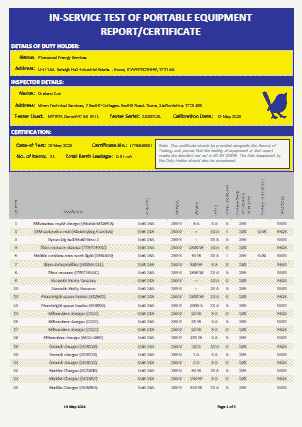 Testing takes about 5 minutes per item. We charge a minimum price of £30 for 10 items, with additional items tested for £3 each. If you have more than 100 items, it may be more cost-effective for you to take advantage of my £300 day-rate. It generally works well in such cases if you collect all the items and bring them to a central location for testing, but I can go room to room if needed; it just takes longer. I enter all the tests into a database and produce a report which is your combined certificate and asset register. If you have an existing asset register, that will help make sure nothing gets missed. Failed items will still be listed, allowing you to have them re-tested once repaired.
Some items may be business critical such as IT equipment, so we might need to schedule a quiet time when they can be unplugged for a few minutes. We have the training to safely Lock-Out-Tag-Out circuits to safely test fixed appliances.
We are trained to the latest Edition 5 of the Code of Practice. I am also fully qualified to the BS7671 18th Edition Wiring Regulations. Our test meter is calibrated yearly.